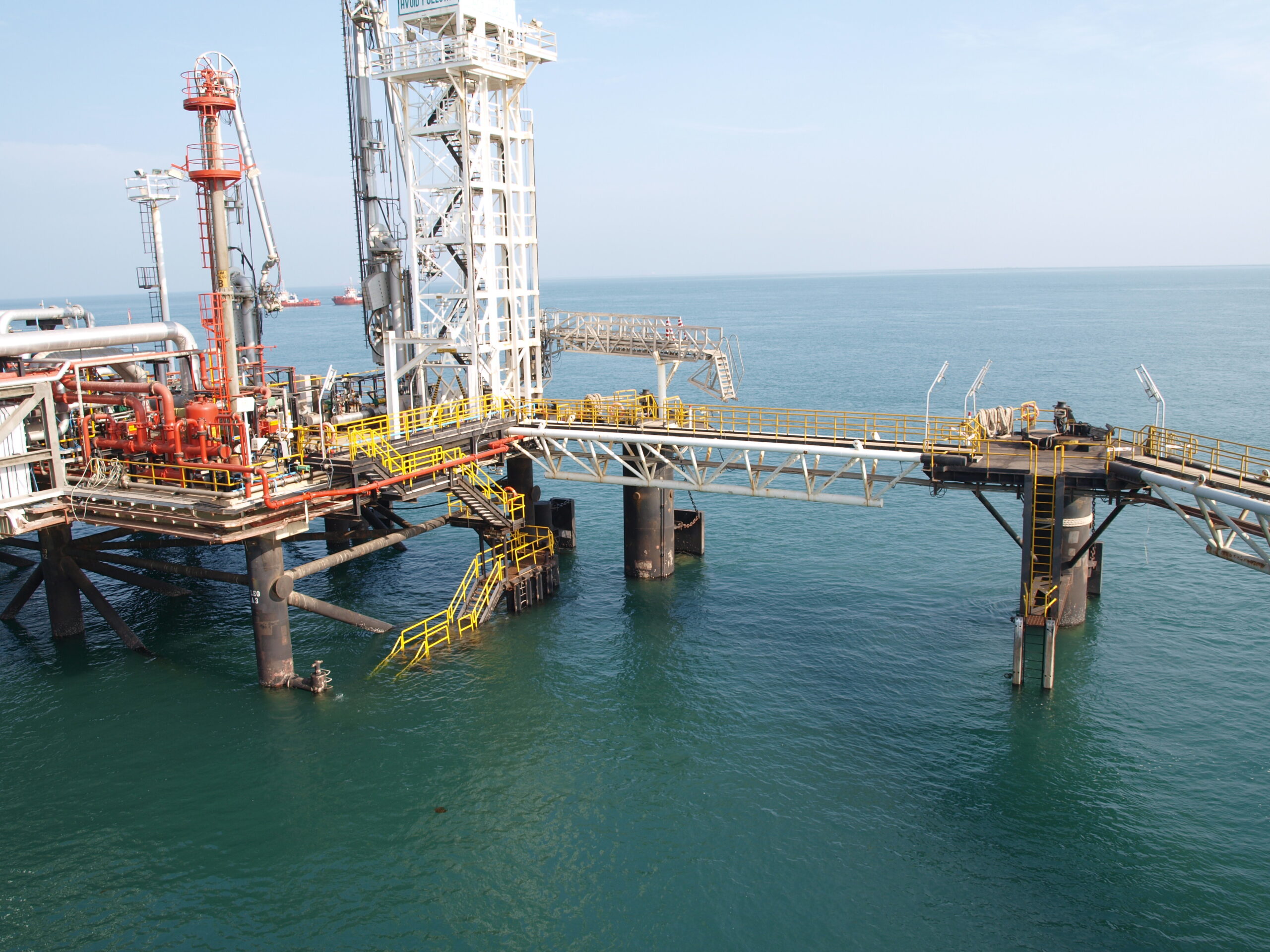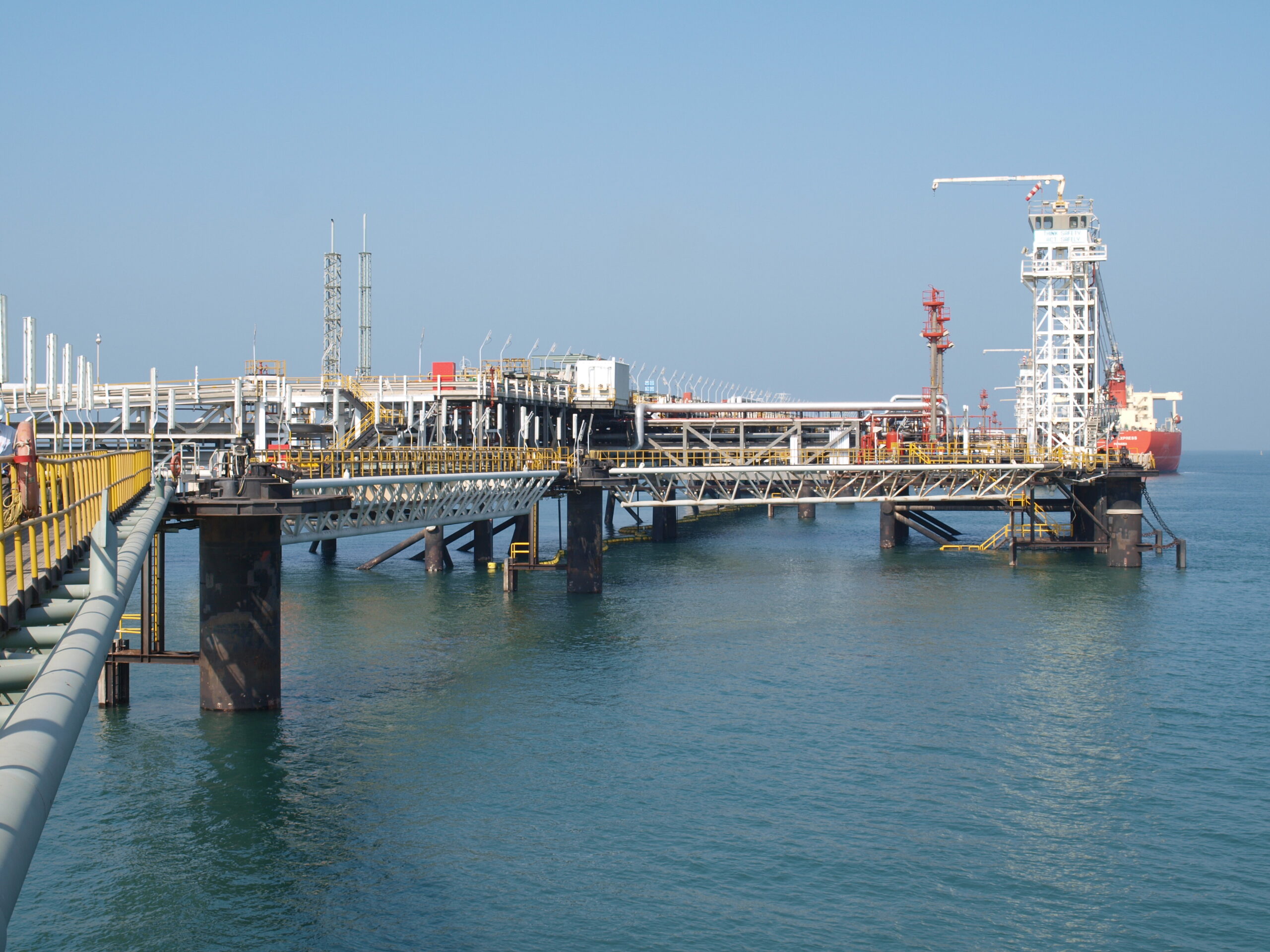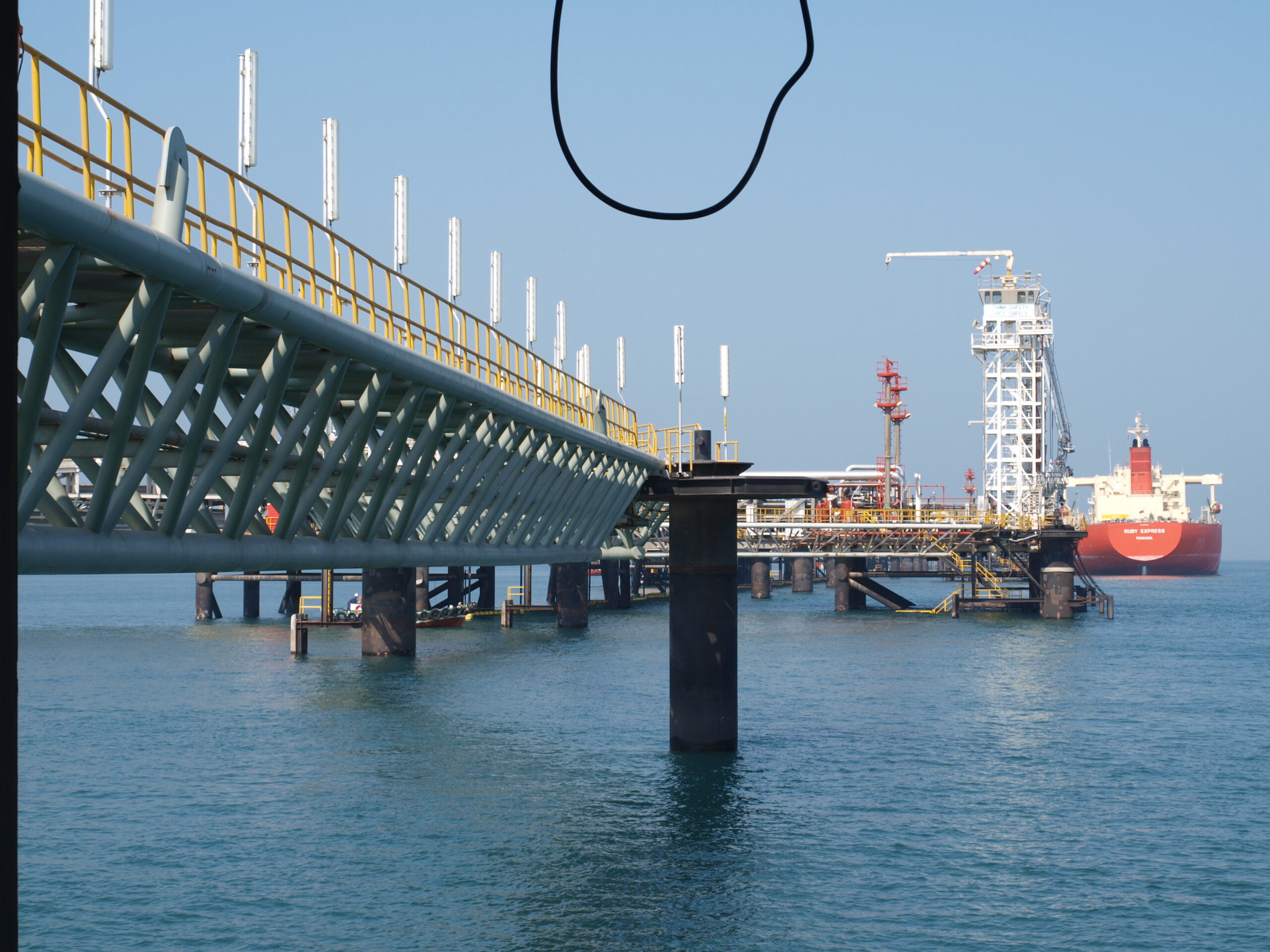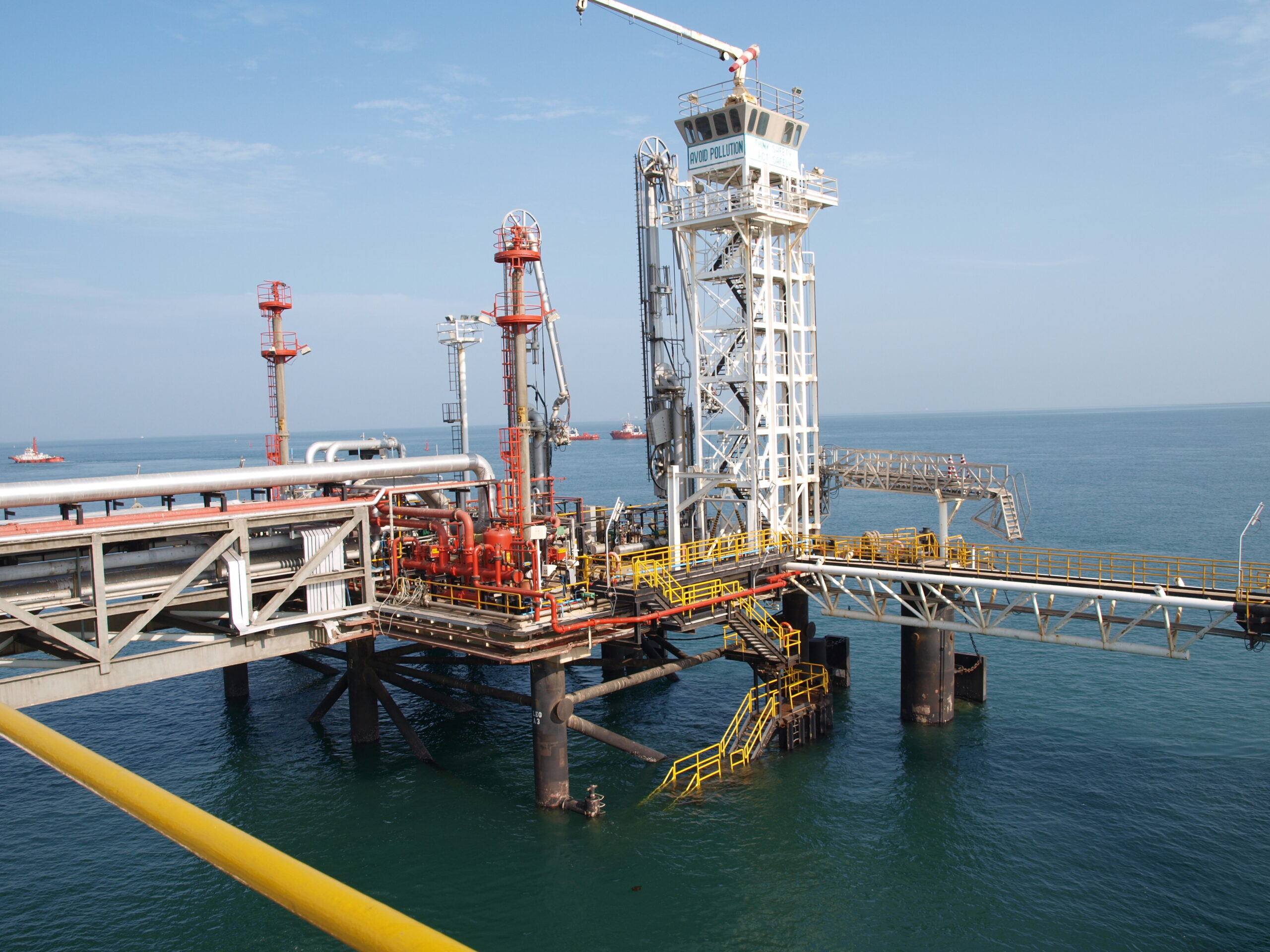
The Jamnagar Export Refinery Project (JERP) represents a landmark expansion of the world’s largest grass-roots refinery complex. TECON provided comprehensive multidisciplinary engineering services for Bechtel France and Reliance Port & Terminal Ltd, delivering detailed design solutions for critical marine terminal infrastructure.
Located in the Gulf of Kutch approximately 35 kilometers west of Jamnagar town, the Reliance Jamnagar Marine Terminal was originally inaugurated in 1999 with a capacity of 33 MMTPA. After eight years of successful operations, Reliance Industries Limited planned an ambitious expansion to nearly double the crude processing capacity to 64.6 MMTPA, maximizing production of refined petroleum and petrochemical products for global export markets.
The existing marine facility comprised two Single Point Moorings (SPMs) for crude oil import, four tanker berths (A, B, C, and D) for product export, and a seawater intake facility. The infrastructure included a complex network of pipelines supported on RCC sleepers and steel frames from the Marine Tank Farm to the Land Fall Point, continuing on pile-supported structures along a 1,400-meter shore link, and extending across a 3,600-meter Approach Trestle with 60-meter span structural steel beams supported on mono-pile structures socketed in hard rock.
The expansion required seamless integration of new facilities with existing operational infrastructure while maintaining continuous refinery operations. This demanded precise engineering to accommodate additional crude import capacity through one new SPM and enhanced product export capability through two new SPMs, all while routing new pipelines through existing facilities to a new Riser Platform.
TECON’s comprehensive engineering services encompassed the complete design lifecycle for the marine terminal expansion, addressing multiple interconnected infrastructure components across the entire facility from onshore to offshore installations.
TECON’s multidisciplinary team delivered integrated basic and detailed design services, coordinating civil, structural, mechanical, and marine engineering disciplines. Our approach emphasized compatibility with existing facilities, structural integrity under marine environmental conditions, and construction phasing to minimize operational disruption.
The design incorporated comprehensive analysis of the existing mono-pile structures socketed in hard rock, ensuring that additional loads from new pipeline routes and facilities could be safely accommodated. Special attention was given to expansion joint details, structural connections, and load transfer mechanisms to maintain system integrity throughout the expanded facility.