SAIPEM Congo Terminal Development
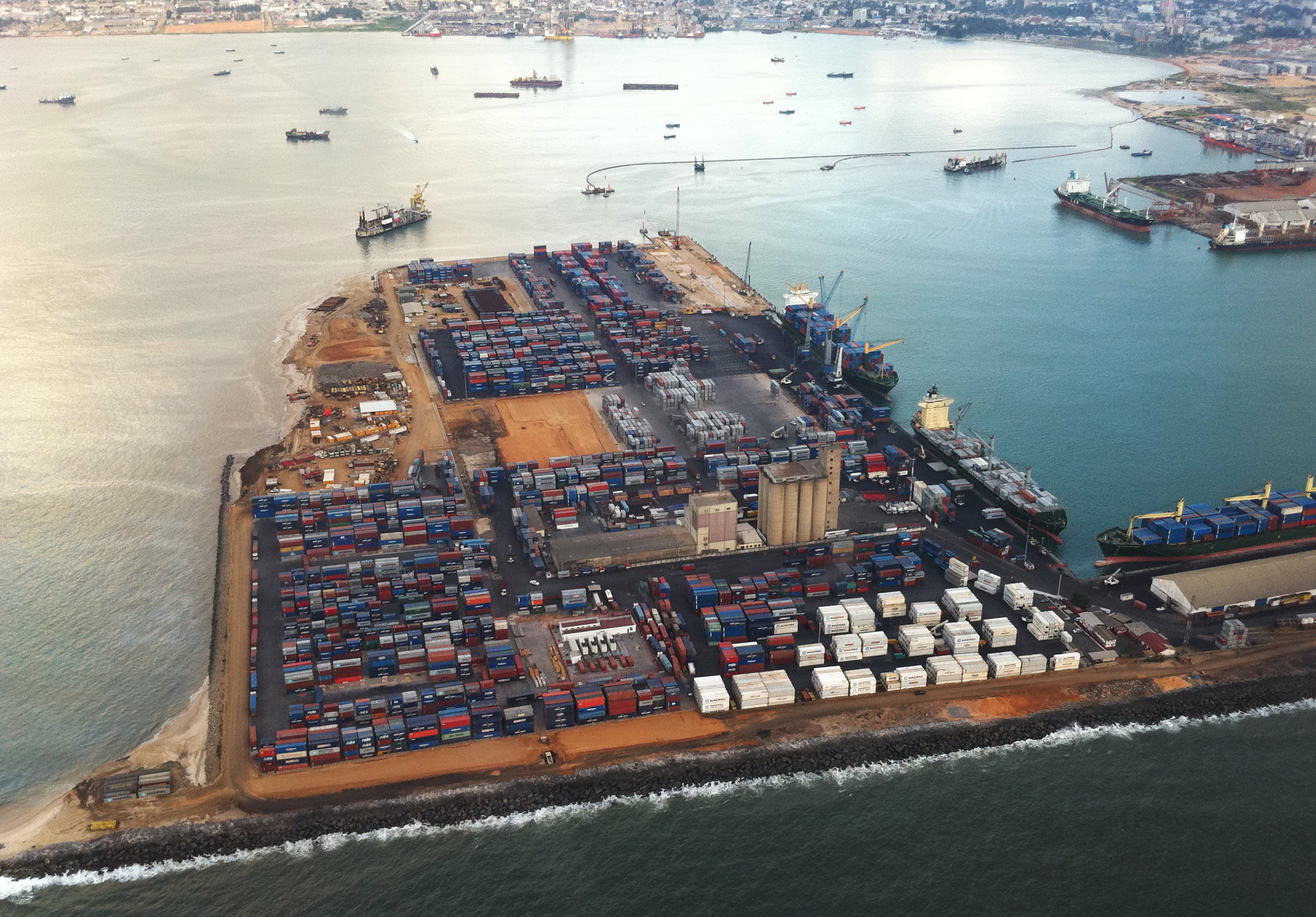
The Congo Quay Project represents a comprehensive maritime infrastructure development undertaken for SAIPEM Congo, with engineering services provided by TECON to SAIPEM Rome. Located in Pointe Noire, the commercial heart of the Republic of Congo, this project was executed between 2011 and 2012 to modernize and expand the container handling capabilities of the SAIPEM terminal.
The project addressed the critical need for enhanced port infrastructure to support growing industrial operations in the region. The existing quay structures required reconstruction to meet modern safety standards and operational requirements, while the addition of new berthing capacity would accommodate larger vessels and increased cargo throughput. This comprehensive approach ensured both structural integrity and operational efficiency for decades to come.
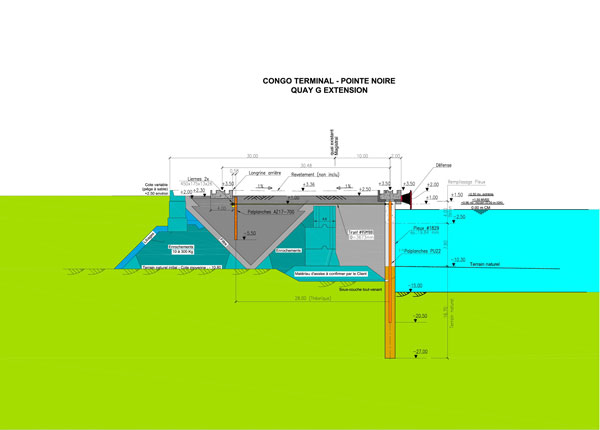
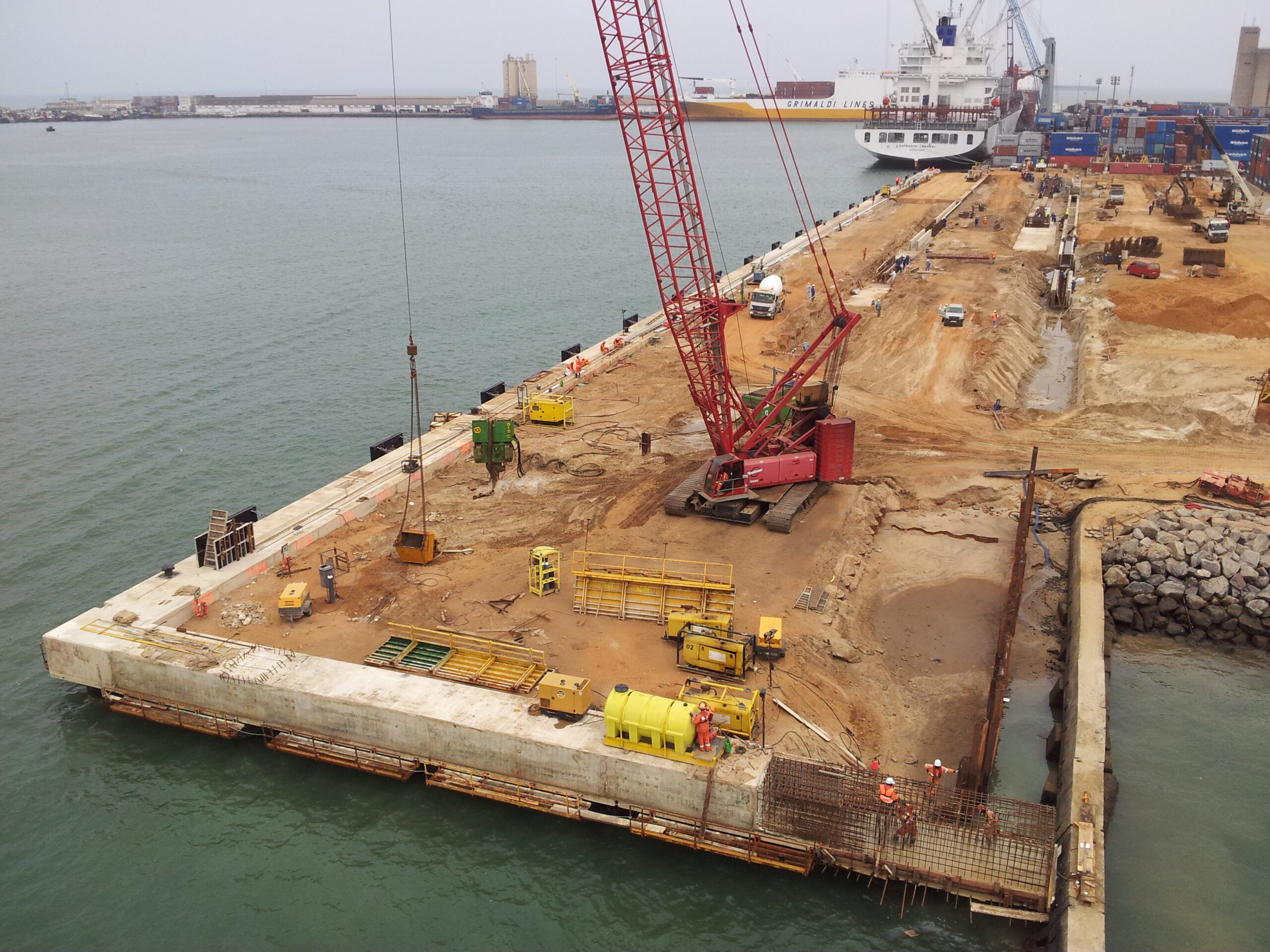
TECON provided detailed engineering design for the complete reconstruction of existing quay sections and the extension of new berthing facilities. The project encompassed both structural rehabilitation and new construction, totaling over 800 linear meters of quay development designed to handle heavy container operations and modern cargo handling equipment.
TECON’s engineering solution employed a robust combi-wall retaining system for the main quay structure, paired with anchor sheet-piles for stability. This design methodology provides exceptional resistance to lateral earth and water pressures while accommodating the significant vertical loads imposed by cargo operations and heavy equipment. The quay deck was engineered to elevation +3.5 meters above mean sea level, providing adequate clearance for tidal variations while ensuring operational accessibility.
The structural design accommodates distributed loads up to 3 tons per square meter across the quay operational area, enabling the use of crawler cranes, mobile cranes, and multi-wheel cargo handling equipment. This load capacity specification ensures versatility in cargo operations and future-proofs the facility for evolving equipment requirements. All design work included comprehensive construction specifications, providing detailed guidance for execution while maintaining the structural integrity envisioned in the engineering phase.