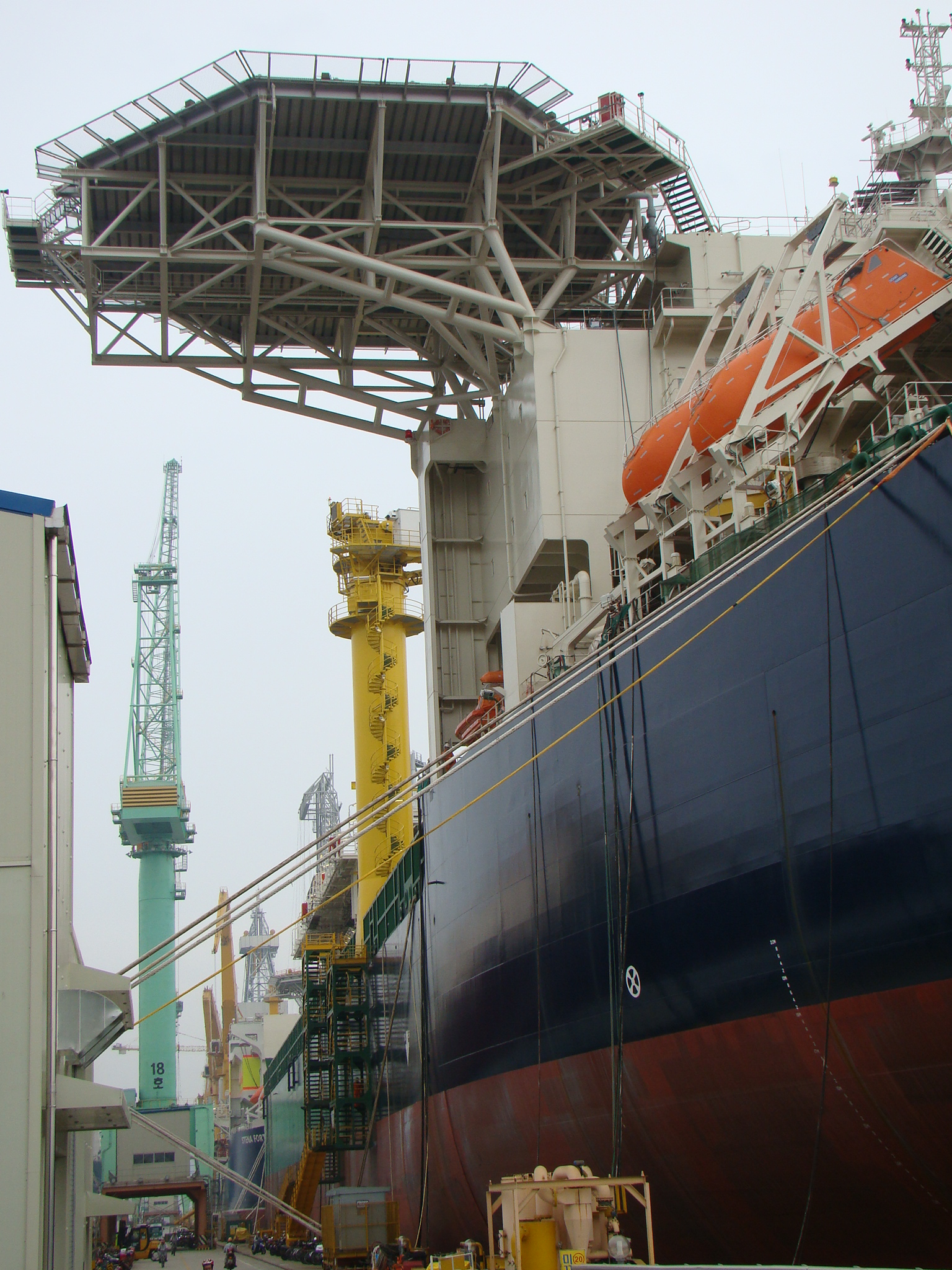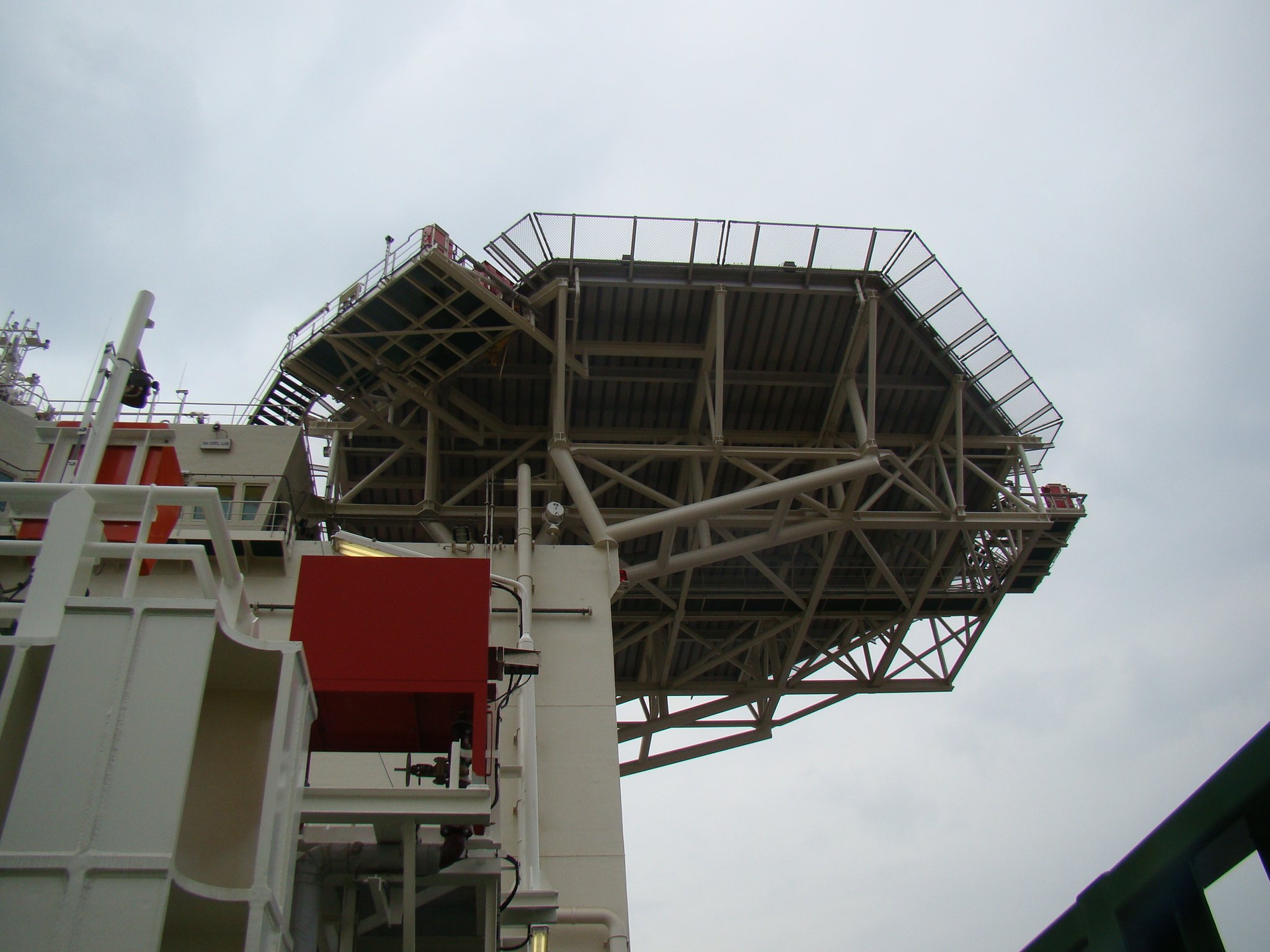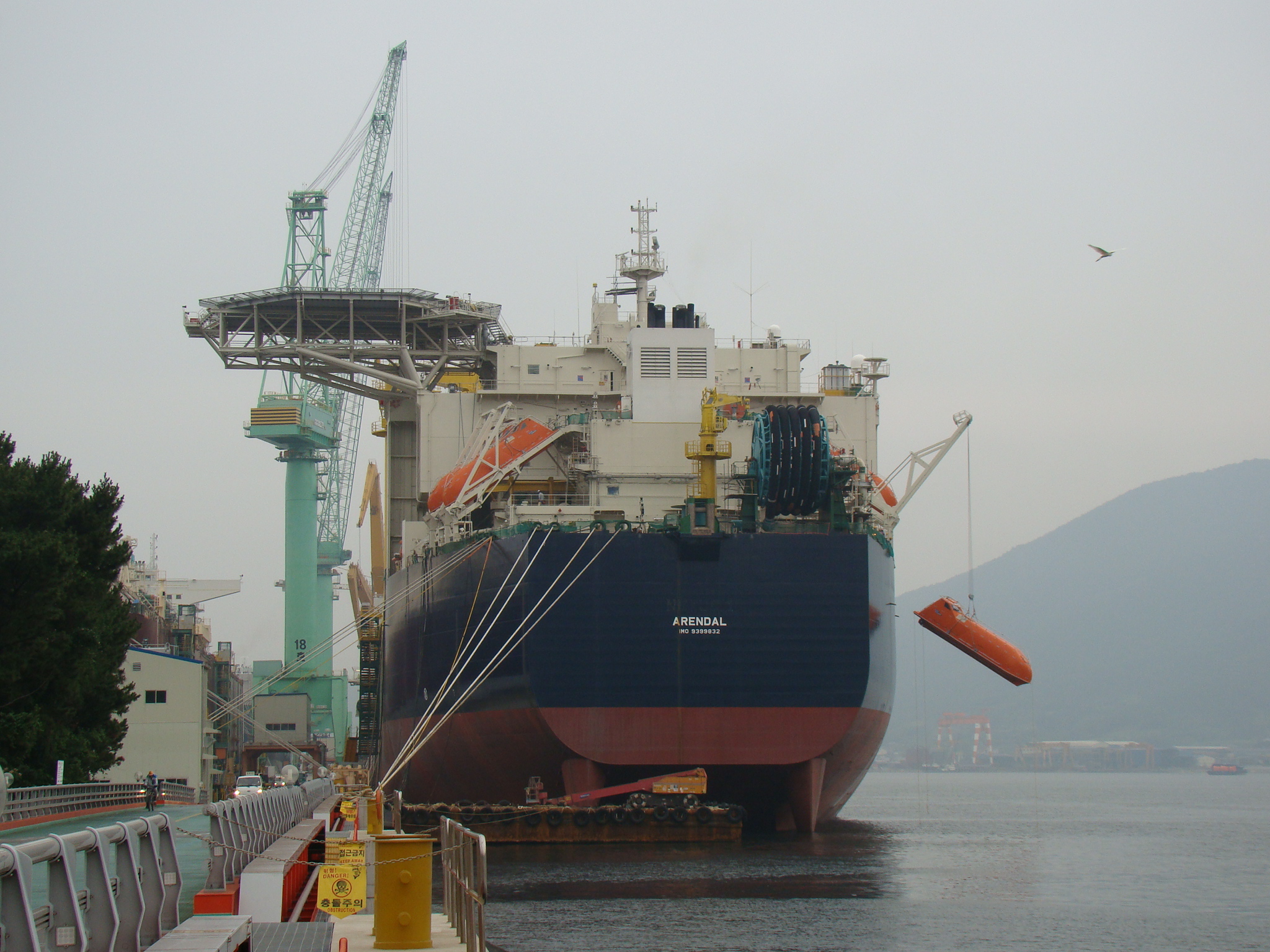
The Helideck Nexus project represents a sophisticated engineering achievement in offshore helicopter landing facility design and implementation. Commissioned by Samsung and executed through Bayards as the primary client, TECON provided comprehensive detailed design services for the helideck structure installed on the Nexus FPSO vessel. This critical infrastructure component ensures safe helicopter operations for personnel transfer and emergency evacuation in offshore oil and gas production environments.
The project required meticulous engineering to accommodate heavy-duty helicopter operations on a floating production platform. The design needed to support both EH101 and S61N helicopter types, with the EH101 representing the design case at a maximum take-off weight of 14,600 kg (143 tonnes). This substantial load requirement, combined with the dynamic marine environment and integration with existing vessel superstructure, presented significant technical challenges requiring advanced structural analysis and multidisciplinary coordination.
The Helideck Nexus project encompassed the complete engineering design of a 22.8-meter diameter octagonal helideck structure. TECON’s scope of work included the development of detailed engineering solutions across multiple technical disciplines, ensuring the facility met international standards for offshore helicopter operations while maintaining structural integrity in harsh marine conditions.
TECON’s multidisciplinary engineering methodology integrated structural, mechanical, and safety systems design into a cohesive solution. The team utilized advanced finite element analysis to optimize the steel support structure, minimizing weight while ensuring adequate load capacity for helicopter operations. The octagonal geometry was selected to provide optimal landing area while efficiently distributing loads to the support points on the vessel superstructure.
The design process involved close collaboration with Bayards and Samsung to ensure seamless integration with the FPSO’s existing systems and structures. Material selection balanced the requirements for corrosion resistance in the marine environment, structural performance under dynamic loads, and weight optimization to minimize impact on the vessel’s overall center of gravity. The final design successfully achieved all performance objectives while maintaining cost-effectiveness and constructability for fabrication and installation during the 2006-2007 project timeline.