Danish North Sea | Total E&P Danmark A/S
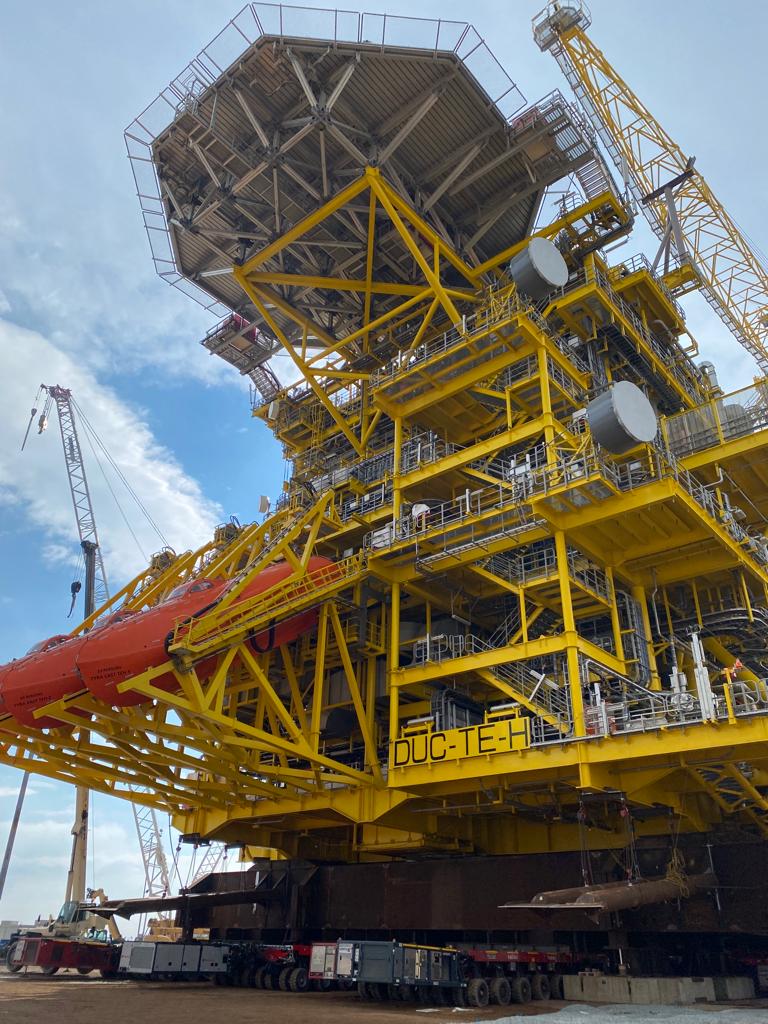
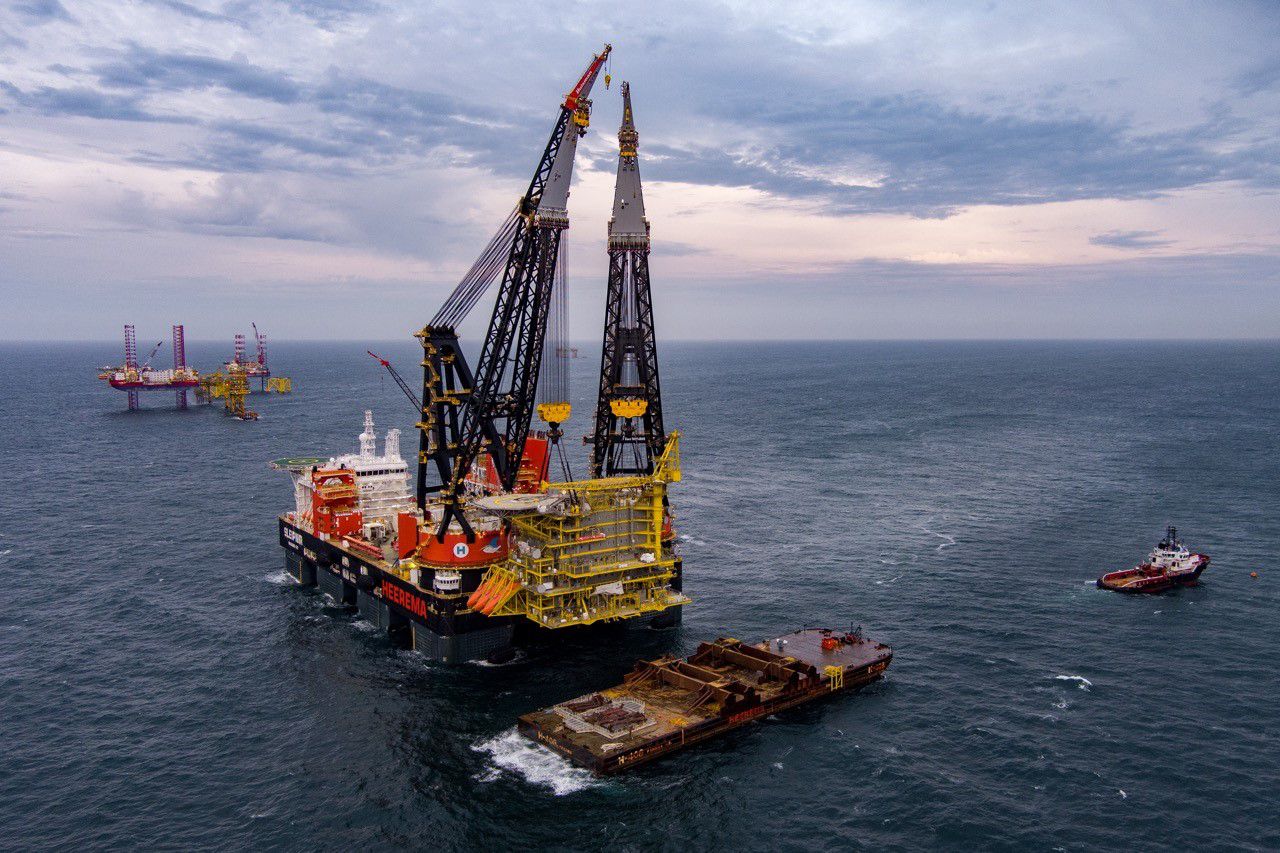
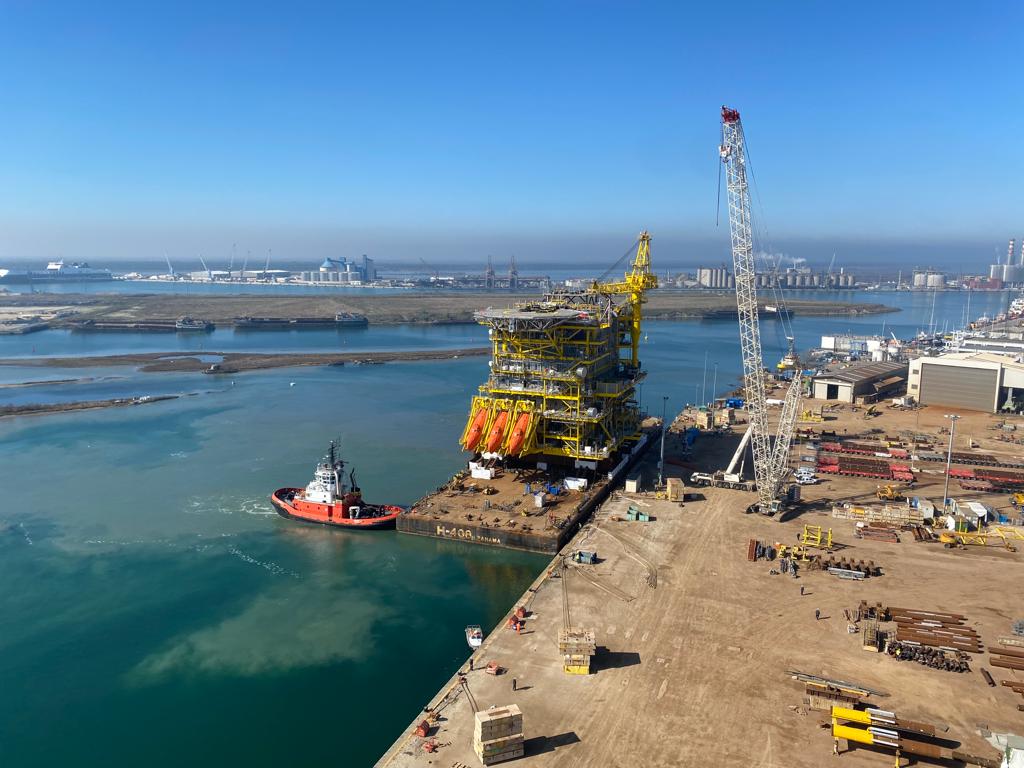
The Tyra Redevelopment Project represents a major offshore engineering initiative undertaken by Total E&P Danmark for the redevelopment of the Tyra field in the Danish North Sea. TECON Srl was contracted by Rosetti Marino S.p.A. to provide comprehensive structural design engineering services for the TEH (Tyra East H) topside platform, which serves as the accommodation and utilities hub for the entire Tyra East complex.
After thirty years of production, the Tyra field has experienced significant seabed subsidence, necessitating the installation of new facilities at higher elevations to ensure continued safe operations. The TEH platform will serve as a permanently manned, fully self-contained facility providing accommodation for 80 persons, emergency response capabilities, power generation, and critical utility systems for the entire Tyra East complex.
TECON’s engagement encompassed the complete structural design basis, analysis, and engineering documentation for the TEH topside structure. This comprehensive scope covered all phases of the platform lifecycle, from fabrication through installation and 25 years of operational service.
The structural design was executed following a rigorous limit states approach in accordance with ISO 19901-3, ISO 19902, and Eurocode 3 (EN 1993), incorporating Total E&P’s MOG standards for jacket and topside structures. The design utilized advanced structural analysis software including SACS IV (Bentley), MOSES (Ultramarine), and ANSYS for finite element validation.
Material selection followed a Design Class methodology per MOTS-31, with primary structure utilizing S420G1+QT/+M offshore grade steel (EN 10225) with enhanced toughness requirements (CV2 at -40°C). The design incorporated comprehensive load combinations across multiple limit states, with partial action factors ranging from 1.30 (permanent loads, ULS) to 1.00 (accidental conditions).
A key engineering challenge involved managing the complex interface with the TEHZ bridge, designed by McDermott, which is fixed at the TEH end and supported on elastomeric bearings. The structural model incorporated bridge reactions across all load cases including friction forces, environmental loads, and accidental scenarios such as blast (0.05 barg) and ship impact.
Fatigue life assessment was performed using spectral analysis methods for the transportation phase, with cumulative damage calculated per Miner-Palmgren theory using ISO S-N curves and validated stress concentration factors. The crane pedestal fatigue analysis incorporated 100,000 lifts over 25 years using a log-normal weight distribution, with transportation fatigue damage added per MOGfat requirements.
The topside features a sophisticated four-leg steel frame structure (25.5m × 24.0m array) with longitudinal and transverse trusses extending from elevation +29.0m to +62.5m LAT. The structural configuration includes corrugated external walls from Level 4 to roof, providing both architectural function and lateral bracing, modeled with orthotropic plate properties to capture the unique stiffness characteristics along and across corrugations.